Callie Norton
February 10, 2026
•
5
min read

Picture this: a patient checks out after their appointment, everything feels complete, and your day moves on. Later, someone realizes the follow-up never got scheduled.
This is how patient retention breaks down. Even with great care and good intentions, retention depends on memory and timing (both unreliable on busy days).
Practices that keep patients coming back understand one thing: Loyalty isn't earned during the visit. It's earned between visits, through predictable patient engagement systems patients can rely on and teams can maintain.
In this playbook, Doctible experts outline the systems practices use in 2026 to keep patients engaged without adding more work.
“People like consistency and patterns they can predict.” – Jon Ortega-Flores, Senior Product Manager, Doctible
What’s changed in 2026 is how patient retention is earned. These days, patients only trust what they can predict. When communication follows a clear pattern—meaning they know when they’ll hear from you and what the next step is—they’re far more likely to stay engaged with their care.
Overall, that predictability comes from a small set of repeatable touchpoints working together:
Together, these levers create a communication pattern patients recognize and teams can maintain, which is what patient retention actually looks like in practice today.
“How you respond to reviews is also a representation of your business.” – Doctible customer success team
Recent research on patient decision-making has found that while star ratings get attention, they don’t always settle the decision. Patients also read review responses to understand how a practice communicates, handles concerns, and follows up when something isn’t perfect.
In other words, reviews are where patients learn what to expect from you between visits.
That’s why your responses should reflect how your practice communicates after the visit.
A simple thank-you is enough. You don’t need to reference the visit, the condition, or the outcome to sound genuine. Staying general protects patient privacy and keeps your team out of trouble, while still showing appreciation.
Patients notice tone immediately. If a review is warm, respond warmly. If it’s neutral, keep your reply calm and professional. Avoid copy-and-paste language that makes every response sound the same. Consistency matters more than polish.
When a review raises a concern, don’t explain, debate, or correct the record publicly. Acknowledge the feedback and invite the conversation offline. Patients reading along aren’t looking for details. They want reassurance that concerns are taken seriously.
Use these as starting points. Keep them short, human, HIPAA-compliant, and easy for your team to reuse.
Five-star review
“Thank you for taking the time to share your experience. We appreciate the kind words and look forward to seeing you again.”
Positive but brief review
“Thanks for your feedback. We’re glad you had a good experience and appreciate you choosing our practice.”
Neutral review
“Thank you for sharing your thoughts. We appreciate the feedback and are always looking for ways to improve.”
Low-star review (general concern)
“Thank you for bringing this to our attention. We’d like to learn more and address your concerns. Please contact our office directly so we can follow up.”
Low-star review (strong frustration)
“We’re sorry to hear about your experience and appreciate you sharing it. Our team would like to connect with you directly to better understand what happened and help however we can.”
See how Doctible’s centralized reputation management can help your team request, monitor, and respond to reviews in one place.
“Personalization prevents automation from feeling robotic.” – Doctible customer success team
Patients don’t expect personal outreach every time they share feedback. However, they do expect acknowledgment. What you say and when you say it ultimately shape how well your follow-up is received.
Still, feedback isn’t a single action. It plays different roles depending on where it shows up and what the patient is trying to communicate. Recognizing that difference is what turns feedback into a retention lever instead of a missed moment.
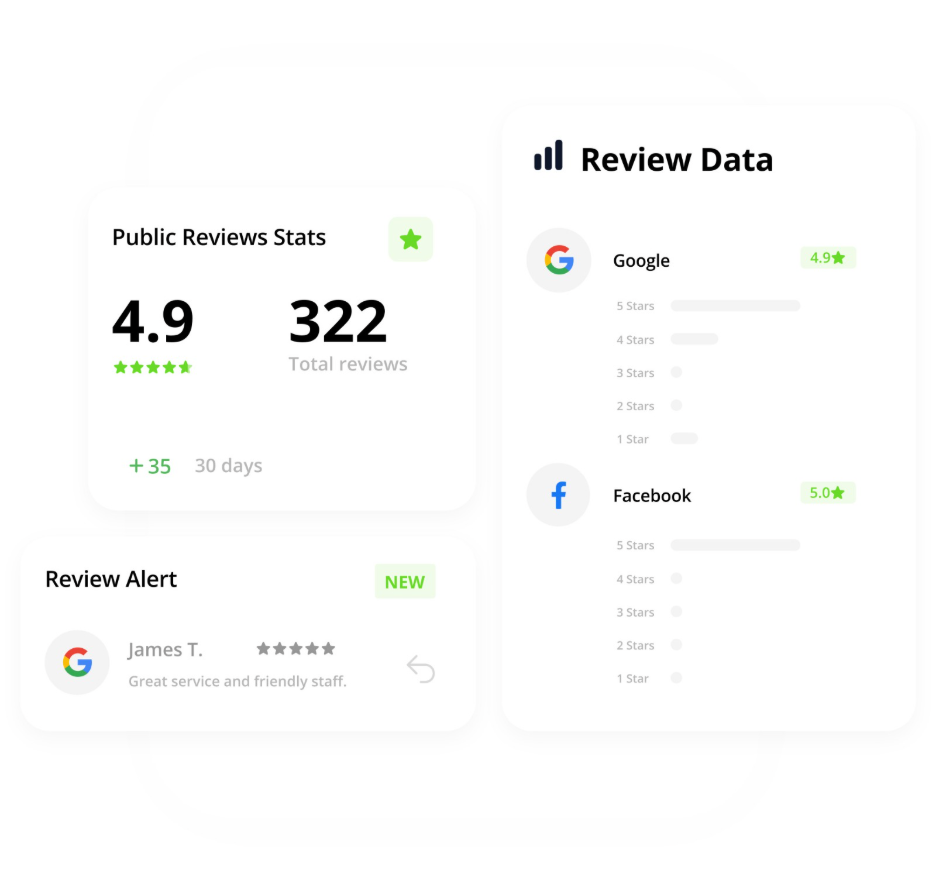
Public reviews shape first impressions. They show prospective patients how your practice communicates and how you respond when things aren’t perfect. As a result, consistent and professional responses help protect trust at scale, even when you can’t control the feedback itself.
Private feedback serves a different purpose. This is where service recovery happens. It gives you a chance to respond quickly, address a small issue, and close the loop before a patient decides to seek care elsewhere.
That being said, most patient loss doesn’t come from major failures. Instead, it builds from small frustrations that go unaddressed, like a rushed interaction, confusing follow-up, or message that never got a reply. When those moments stack up, patients don’t leave because the care was poor, but because the experience felt unresolved.
Moreover, practices that retain patients consistently treat feedback as the start of a conversation, not the end of one. With automated outreach, it’s easier to ensure no message slips through the cracks, while a personal tone keeps responses from feeling transactional. That balance turns feedback into follow-up, and follow-up into retention.
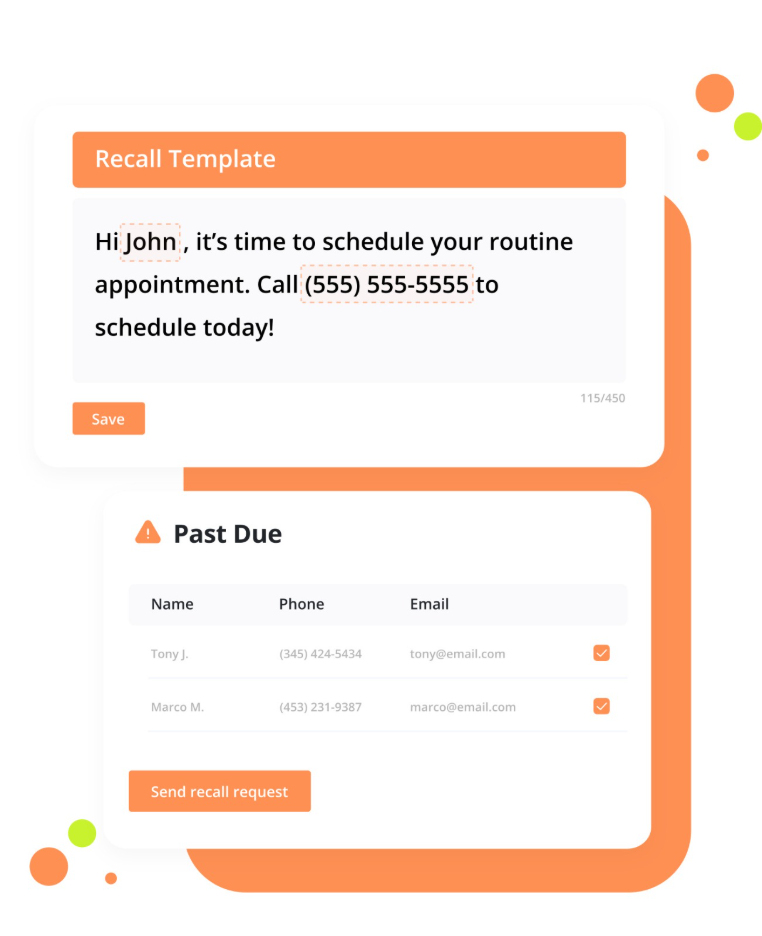
Recall is one of the biggest separators between practices with consistently full schedules and those constantly chasing openings. When follow-up depends on memory, sticky notes, or end-of-day phone calls, it becomes inconsistent fast.
Manual recall also comes with a real cost. Front-desk teams spend hours each month trying to track down patients after visits, often with uneven results. A clear recall cadence removes that burden by making follow-up predictable for patients and manageable for staff.
That’s where automated patient recall changes the equation.
“One of the habits that separates practices that consistently fill their schedule from those that don’t is recall. If your staff is manually trying to reach out to patients after the first visit or a month later, you’re wasting probably 10 hours a month just calling and doing all of that.”
– Doctible customer success team
With the right cadence in place, recall stops being a reactive task and becomes part of your day-to-day workflow. Patients know when they’ll hear from you, and your team doesn’t have to decide who to follow up with or when.
Between visits, patients don’t disappear. They just go back to their lives. Staying present in small, familiar ways keeps your practice from fading into the background.
“The biggest thing for newsletters is happy birthdays. Everyone loves to be told happy birthday. Holidays are another big one. You can send a quick ‘happy holidays,’ share office updates, or introduce a new doctor or staff member. It shows patients you’re up to date and that you care. A lot of the services we provide aren’t one-and-done. Staying in touch between visits really helps.”
– Nick Navarro, Account Executive
Ultimately, this doesn’t need to be complicated. With automated messaging, you can stay in touch between visits without adding work for your team.
You don’t need a full content calendar. A few familiar messages, set up once and checked regularly, are enough to stay connected between visits.
Timing only becomes a problem when it’s inconsistent. A predictable schedule makes it easier for patients to know what’s next and easier for staff to manage follow-up without overthinking it.
A simple cadence many practices can manage looks like this:
Over time, this kind of consistency becomes familiar to patients and easier for teams to maintain. Predictable communication patterns are what turn routine outreach into long-term loyalty.
Often, patient retention issues aren’t a result of how you deliver care. They start with what happens after the visit, when follow-up becomes inconsistent and the next step isn’t clear.
With Doctible, you can put predictable communication in place across the moments that matter most:
Want follow-up you don’t have to think about? Schedule a Doctible demo today.

Han, X., Lin, Y., Han, W., Liao, K., & Mei, K. (2024). Effect of Negative Online Reviews and Physician Responses on Health Consumers’ Choice: Experimental Study. Journal of Medical Internet Research, 26, e46713–e46713. https://doi.org/10.2196/46713
Shep Hyken. (2026, January 25). Customers Don’t Want Transparency—They Want Predictability. Forbes. https://www.forbes.com/sites/shephyken/2026/01/25/customers-dont-want-transparency-they-want-predictability/
Doctible. (2026). Doctible Business Associate Agreement. https://cdn.prod.website-files.com/634140deb6d8840ffe3864a0/64121ad416e1a263594b89b0_Doctible%20BAA-new%20brand.pdf

If you want the best digital patient engagement and marketing platform, you need Doctible.