Doctible Team
December 12, 2025
•
6
min read

Key Takeaways
Before a patient walks through your door, they’ve already looked you up online. They’ve checked Google, read reviews, and compared you to other providers.
A strong online reputation builds trust, attracts more patients, and keeps them coming back. But online reputation management (ORM) isn’t always straightforward.
A handful of negative reviews (or too few reviews) can give potential patients the wrong impression of your office.
You can’t control what every patient says online, but you can control how your practice shows up.
Here’s what you can do to build trust, get more reviews, and turn your online presence into a patient magnet.
Patients rely on reviews to make decisions, but many don’t leave them. While 84% check online reviews before choosing a provider, 57% rarely or never leave one.
That imbalance can make a handful of opinions—especially negative ones—stand out.
Here’s how to get more positive reviews from satisfied patients:
The more current, high-quality reviews you have, the more confidence potential patients will have in your practice.
But getting reviews is only part of the equation. What you do with them matters just as much.
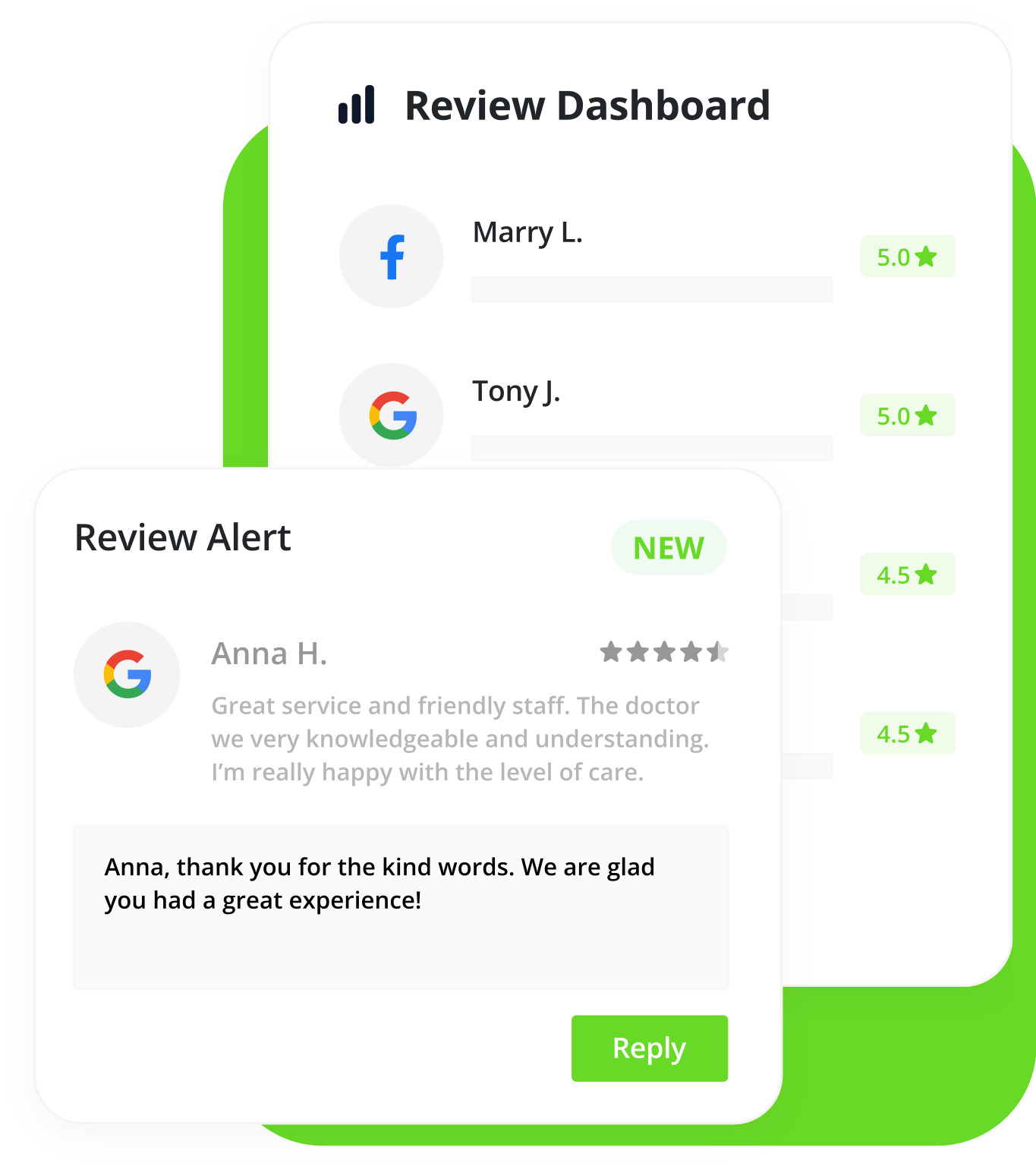
Patients expect to be heard—even after they leave your office.
In fact, 53% expect a business to respond to a negative review within a week, and a third expect a reply in three days or less. Ignoring feedback—or waiting too long—can make your practice seem unresponsive.
But how you respond matters just as much as when you respond. 56% of consumers have changed their opinion of a business based on its reply to a review.
A well-handled response can turn a bad experience into a second chance.
Here’s how to deliver a thoughtful response and build trust:
Thoughtful responses don’t just resolve issues. They show future patients that you listen, care, and take feedback seriously.
If you’re not keeping an eye on your online presence, you could be losing patients without even realizing it. Outdated contact information, unanswered reviews, and inconsistent listings can damage your practice's reputation.
Set up alerts so you know when new reviews come in. Google Alerts and review monitoring tools help but checking online profiles once a week makes a difference.
Next, make sure your practice details are accurate. If your phone number, office hours, or website info is outdated, patients may give up and look elsewhere. Regularly updating your Google Business Profile, website, and social media pages keeps everything consistent.
Doctible's, website optimization, and reputation management services help track, update, and improve your online presence.
Positive reviews from a month or week ago give patients confidence in choosing your practice. Once you have good ORM, it becomes easier to grow without constantly chasing new patients.
Competitive advantages of effective ORM:
Online reputation management with Doctible includes reliable tools to attract more patients, increase bookings, and improve retention.
Your online reputation influences every patient's decision. When people search for a provider, they look at reviews, rankings, and the experiences of others. A strong reputation means more visibility, more trust, and more appointments.
With Doctible, you can take control. Our digital reputation management and SEO tools help you stay ahead, attract the right patients, and ensure your online presence reflects the quality of care you provide.
Schedule a demo today and build a reputation that keeps your practice growing.

Clark, J. (2024, November 7). 18 Online Review Statistics Every Marketer Should Know. Search Engine Journal. https://www.searchenginejournal.com/online-review-statistics/329701/
Littrell, A. (2025, February 18). Patients trust online reviews, but they don’t leave them. Medical Economics. https://www.medicaleconomics.com/view/patients-trust-online-reviews-but-they-don-t-leave-them

If you want the best digital patient engagement and marketing platform, you need Doctible.